Postman

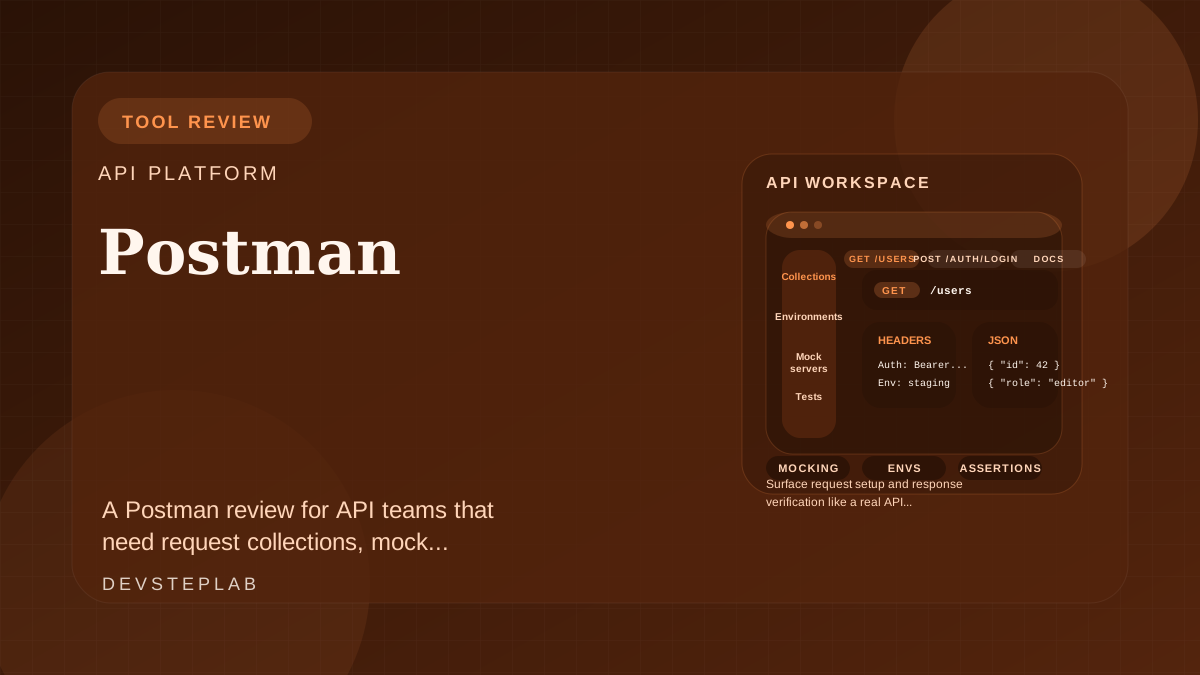
A Postman review for API teams that need request collections, mock workflows, environments, and collaboration around backend development.
Postman remains useful because API work is not only about automated verification. Teams still need a shared place to explore requests, debug auth issues, mock edge cases, and hand a contract to another developer or stakeholder quickly.
Postman is most useful when API workflows need shared collections, mocks, test automation, and fast collaboration between frontend and backend teams.
Best fit: active API collaboration
Postman is strongest when teams need:
- exploratory request workflows
- environment management across local and staging setups
- mock servers or examples for handoff
- one shared place to document and try an API surface
That makes it especially useful during integration-heavy phases.
Workspaces need curation
The downside of a mature API platform is that it can accumulate stale collections, duplicated environments, and undocumented request chains quickly.
A maintainable workspace needs:
- named owners
- a clear archive policy
- environment discipline
- collections that map to real product surfaces
How Postman compares to lighter API clients
Postman is rarely the lightest option. Teams usually choose it because collaboration matters more than minimalism.
Lighter API tools can be a better fit when:
- most requests are personal or ad hoc
- the team already documents APIs elsewhere
- workspace governance would become overhead
- the integration surface is small and stable
Postman becomes the better choice when collections, environments, examples, and mock workflows need to move between developers, QA, product, and support with minimal friction.
It complements, not replaces, code-based checks
Postman should sit alongside contract tests, integration tests, and CI checks. It is not a substitute for them. Its value is speed of exploration and collaboration, not being the only source of API truth.
What makes a Postman workspace stay useful
The teams that get the most value from Postman tend to treat it like a maintained product surface:
- collections match real services and domains
- environment variables are named clearly
- deprecated workflows are archived instead of left visible forever
- examples help another person understand the API quickly
That discipline also makes the tool more useful for onboarding and incident debugging, not just feature work.
Editorial verdict
Use Postman when your team needs a mature collaborative API workspace and can keep the collections curated. If your API surface is small and stable, lighter-weight tools may be enough. The decision is about team workflow more than raw feature count.
Related next reads
Frequently Asked Questions
Is Postman still useful if the team already has automated API tests?
Yes. Automated tests protect contracts, while Postman still helps with exploration, mock workflows, team handoff, and debugging requests that are awkward to reproduce in code first.
When does Postman become too heavy for the team?
It becomes heavy when collections, environments, and generated examples grow without ownership. At that point the workspace needs curation, not more folders.