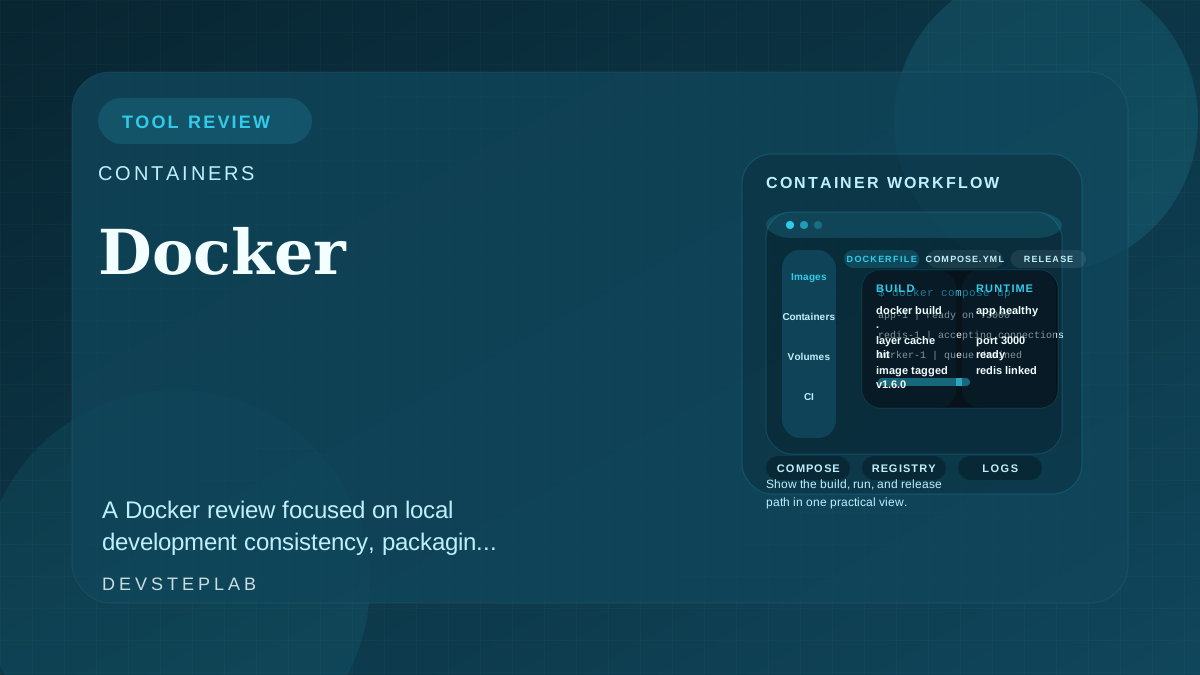
Tool ReviewContainers
Docker
A Docker review focused on local development consistency, packaging workflows, and where containers still create the most value for engineering teams.
Freemium | 4.7/5 editorial rating 4.7
Updated Mar 3, 2026
System design guides, tutorials, and reviews covering scalability, caching, reliability, data flow, and architecture tradeoffs under real traffic.
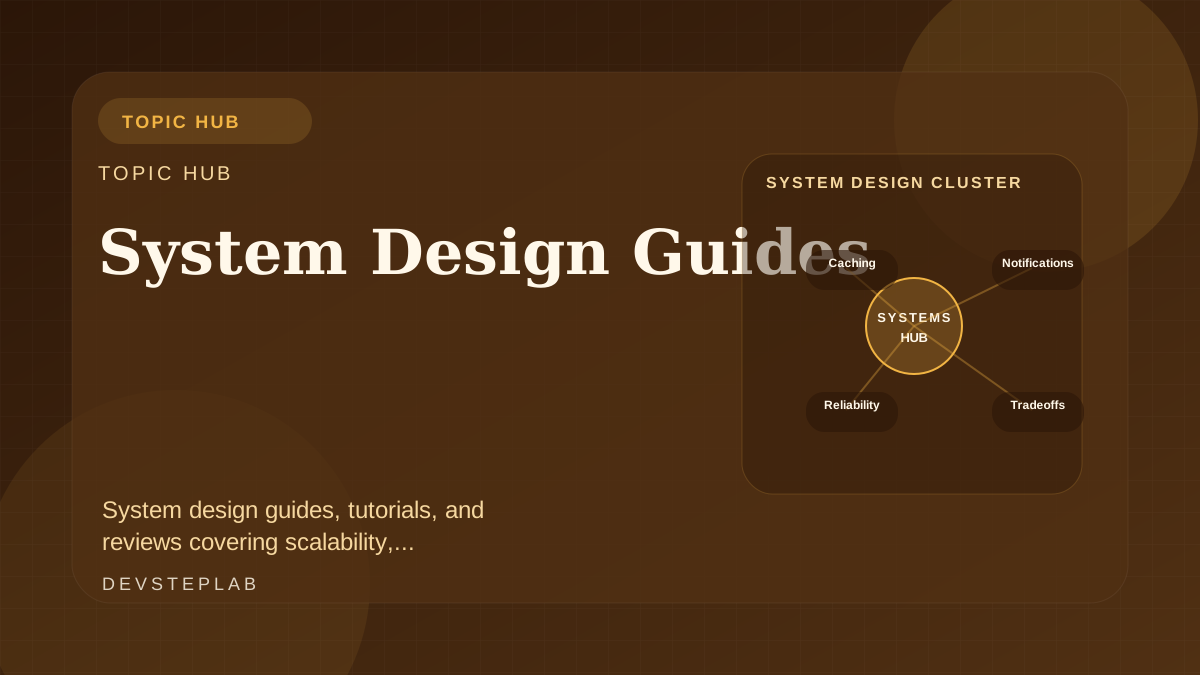
Explore the latest articles, tutorials, guides, and tool reviews mapped to this topic.
Showing all 8 resources in System Design Guides.
A Docker review focused on local development consistency, packaging workflows, and where containers still create the most value for engineering teams.
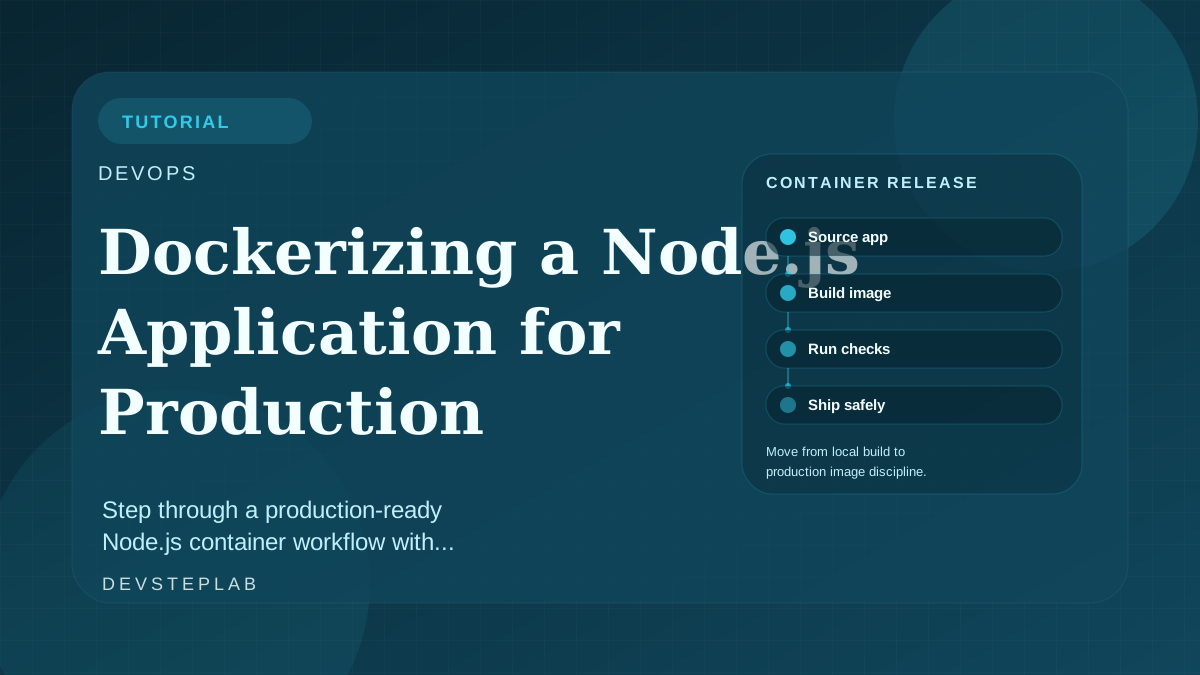
Step through a production-ready Node.js container workflow with smaller images, safer runtime defaults, and CI-friendly Docker practices.
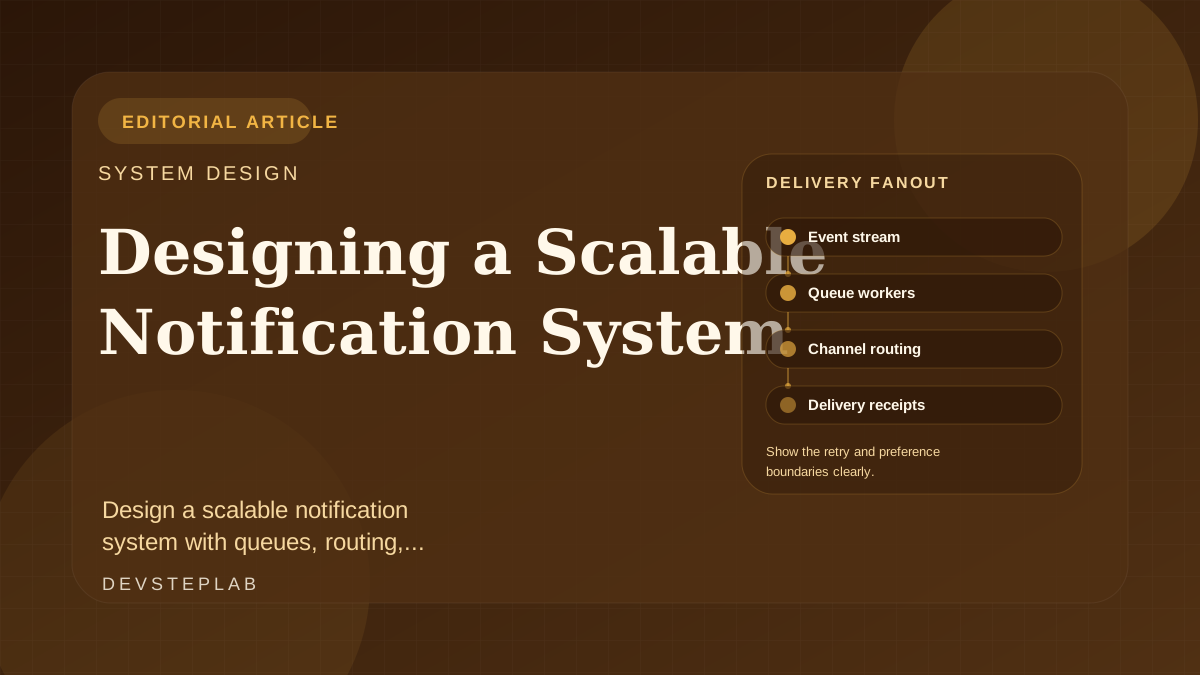
Design a scalable notification system with queues, routing, fan-out, retries, preferences, and delivery safeguards for real production traffic.
A step-by-step PostgreSQL performance tuning tutorial covering query plans, indexing, connection pressure, and workload-aware bottleneck diagnosis.
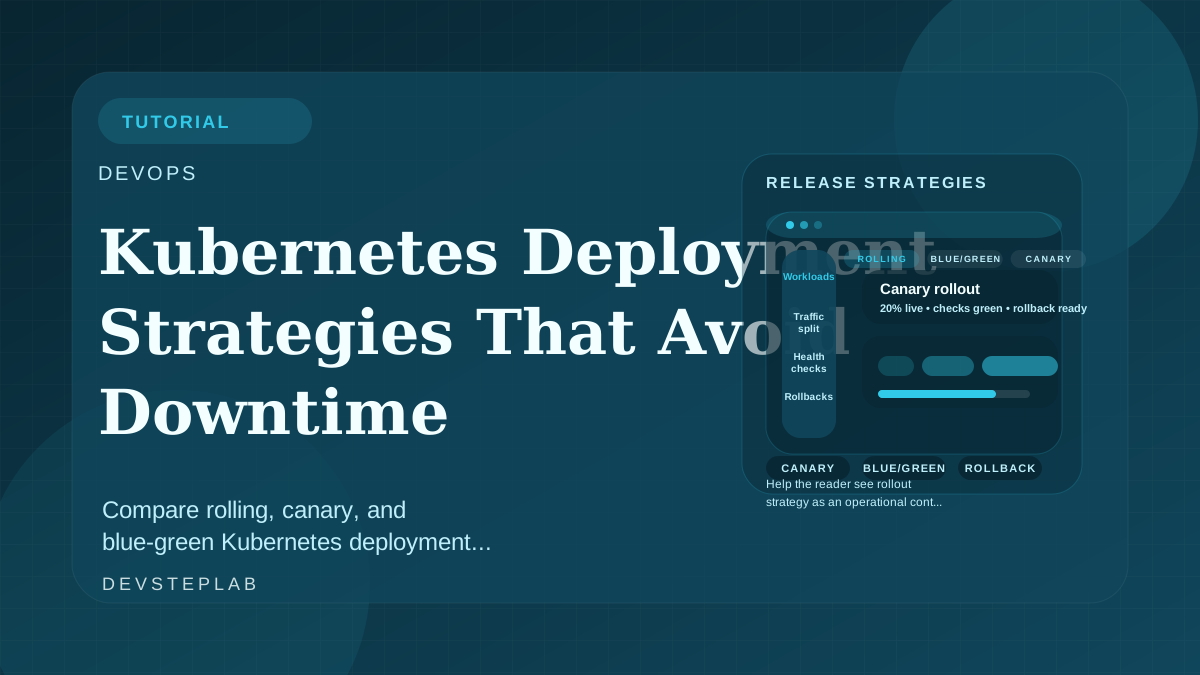
Compare rolling, canary, and blue-green Kubernetes deployment strategies so you can ship changes with less risk and clearer rollback paths.
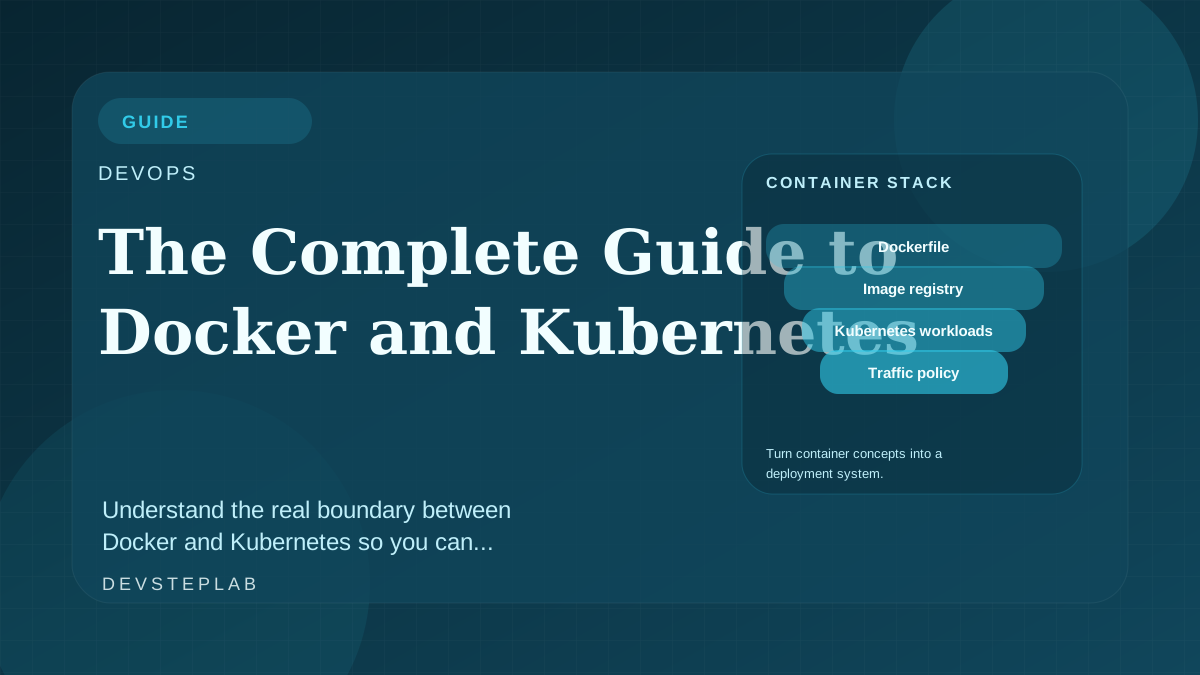
Understand the real boundary between Docker and Kubernetes so you can choose simpler platforms when they fit and orchestration when it truly helps.

Compare microservices and serverless with a focus on team boundaries, platform coupling, cost, latency, and operational ownership.
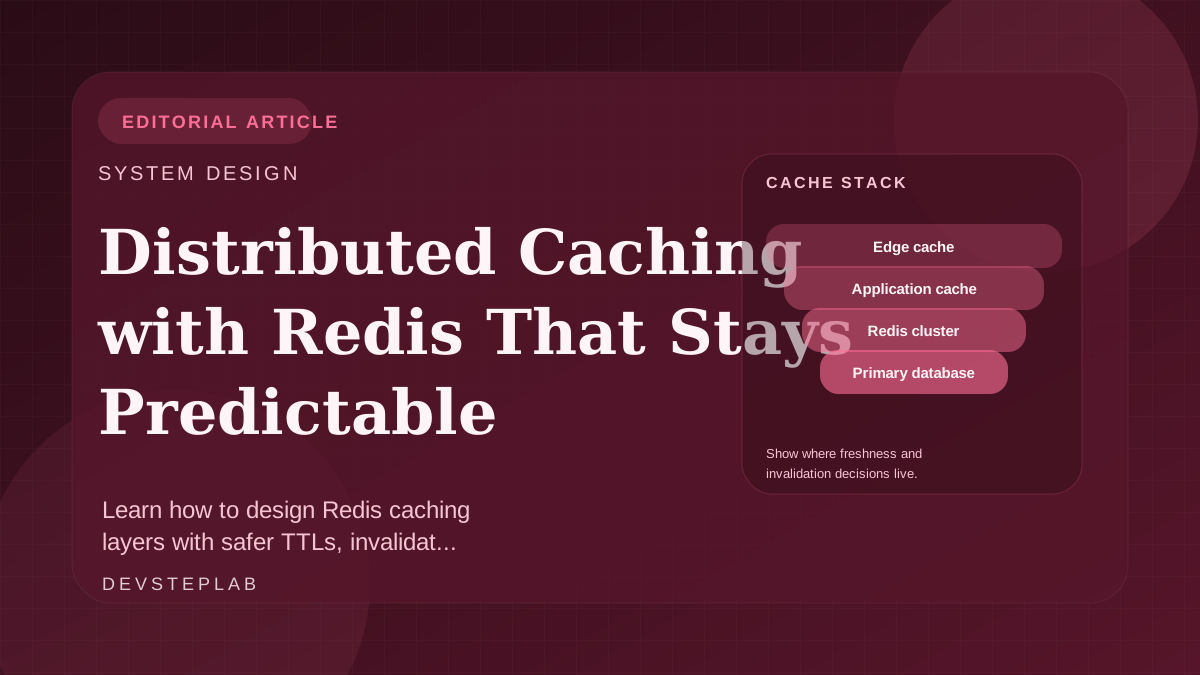
Learn how to design Redis caching layers with safer TTLs, invalidation rules, and failure handling so performance stays predictable.
System design becomes useful when it is treated as a way to reason about constraints, not as a collection of abstract diagrams. This hub is organized around the tradeoffs that show up repeatedly in real systems: scale, latency, consistency, rollout risk, and the cost of operational complexity.
This system design hub is organized around the tradeoffs teams face when scaling reliability, latency, data flow, and platform complexity.
Useful entry points usually begin with a concrete pressure:
That makes the learning path far more durable than memorizing generic architecture templates.
A lot of system-design confusion comes from mixing concerns that need different tools:
This hub is designed to keep those boundaries visible.
The right architectural choice depends on:
That is why the related resources emphasize when a pattern helps and when it quietly becomes another layer to maintain.
Once the basics are stable, use the hub to connect:
Good system design is rarely about choosing the fanciest pattern. It is about choosing the simplest one that still survives the real constraint.
Capacity planning, fan-out, and traffic-aware architecture choices that keep growth manageable.
Redundancy, failover, and recovery models that keep services useful when systems misbehave.
Data guarantees, replication choices, and when coordination cost is justified by the product promise.
Caching, queueing, and request-path optimization under user-facing latency budgets.
Start from a concrete workload or failure mode, then follow the resources that explain the queue, cache, consistency, delivery, or architecture tradeoff behind it.
No. The useful part is learning how traffic, data guarantees, operational constraints, and user expectations shape architecture decisions under real conditions.