Vector Search Fundamentals for Developer Teams
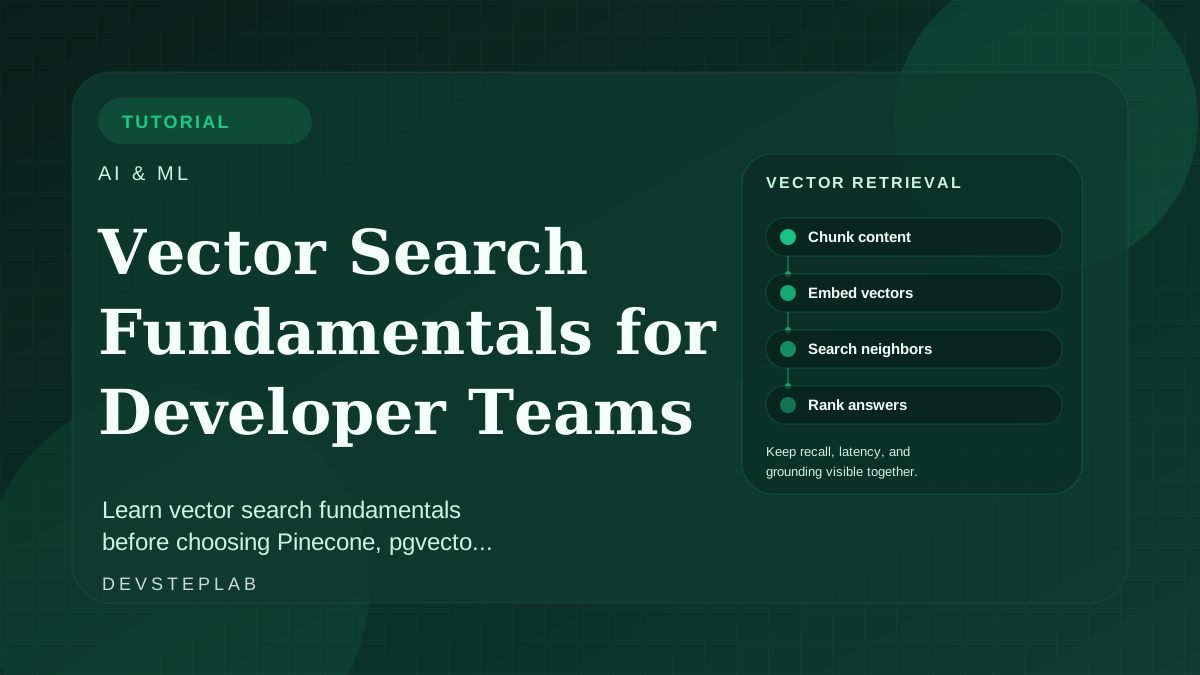
Learn vector search fundamentals before choosing Pinecone, pgvector, Weaviate, or another stack, including embeddings, indexing, retrieval, and ranking basics.
Teams often pick a vector database vendor before they understand the retrieval workflow they actually need. That reverses the decision order. The hard part is not provisioning storage. The hard part is designing chunking, embeddings, ranking, and evaluation around the product use case.
This tutorial lays out the minimum retrieval loop you should understand before you compare Pinecone, pgvector, Weaviate, or an internal service.
Vector search works best when you define retrieval quality, ranking needs, and indexing tradeoffs before picking an infrastructure vendor.
Define the retrieval job
Start with the question the system must answer:
- Are you finding the right support article?
- Are you grounding an LLM response with product docs?
- Are you matching semantically similar code examples?
The retrieval job determines the right chunk size, metadata filters, and evaluation set. If you skip this, every database benchmark is noise.
Build a small index first
You can prove the retrieval pipeline with a local or embedded workflow:
const documents = splitIntoChunks(rawDocs, { maxTokens: 400 });
const vectors = await embedDocuments(documents);
const index = createInMemoryIndex(vectors);

const queryVector = await embedQuery(userQuery);
const matches = index.search(queryVector, { topK: 5 });
This tells you whether the embedding model and chunking strategy are even producing relevant neighbors. Hosted infrastructure comes after that.
Metadata and filtering matter as much as similarity
Pure nearest-neighbor search is rarely enough in production. Real systems usually need:
- tenant or workspace boundaries
- document freshness constraints
- content-type filtering
- reranking by business or editorial signals
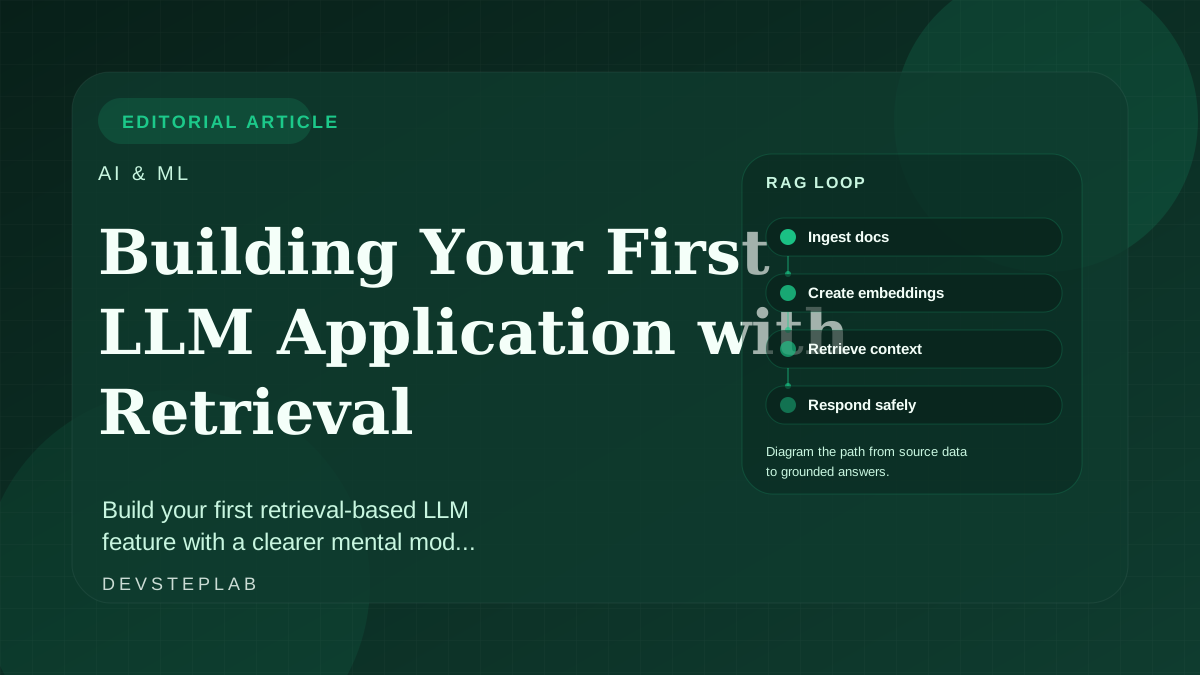
That is why retrieval work overlaps with Building Your First LLM Application with Retrieval. Embeddings are only one layer of the system.
Evaluate with known-good queries
Create a small benchmark set of real prompts and expected documents. Then compare:
- chunk size
- overlap
- embedding model
- top-k depth
- reranking strategy
This is where many teams discover they do not need a specialized vector platform yet. A simpler store with acceptable recall can be the better operational choice.
Choose infrastructure last
Once relevance is measurable, infrastructure selection becomes straightforward:
- Managed vector database when scale and operations justify it
- Postgres with
pgvectorwhen relational filters dominate - Search-first stack when keyword ranking and semantic ranking need to coexist
Good retrieval systems are designed from query behavior outward, not from vendor pages inward.
Related next reads
Frequently Asked Questions
Do I need a vector database before I can test retrieval quality?
No. You can validate chunking, embedding choice, and ranking logic with a small local index before choosing a hosted service.
Are higher-dimensional embeddings always better?
No. Better retrieval comes from the match between your data, chunking strategy, and query patterns. Bigger vectors can increase cost without improving relevance.