Building Your First LLM Application with Retrieval
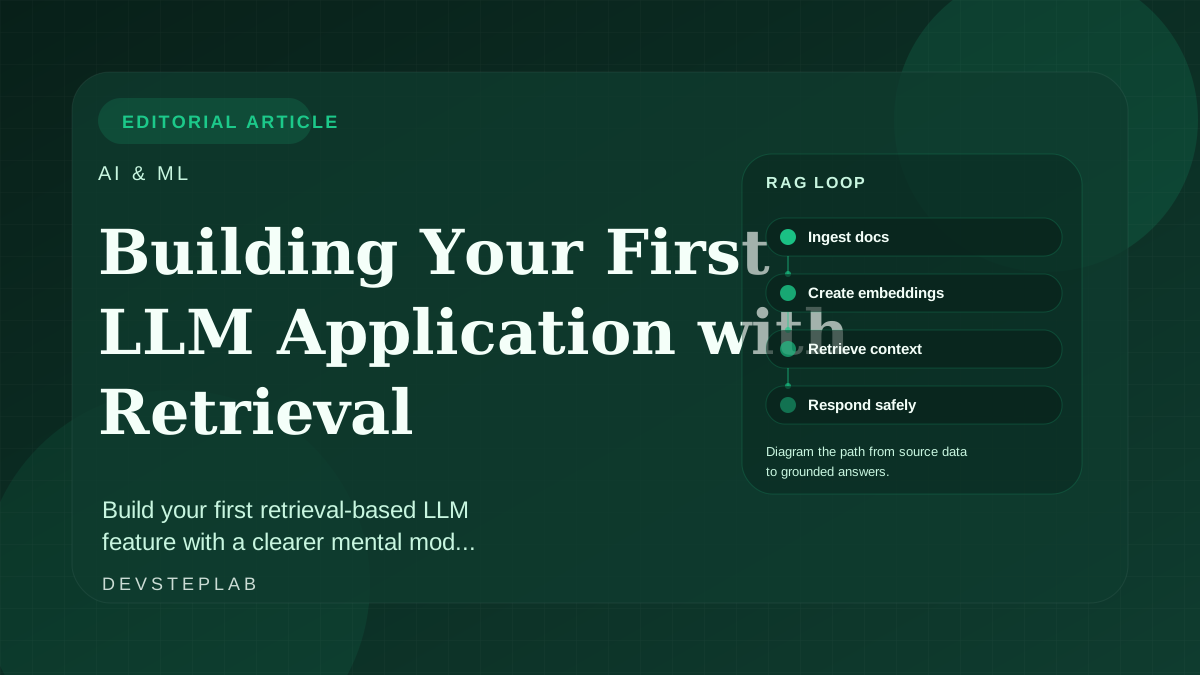
Build your first retrieval-based LLM feature with a clearer mental model for embeddings, retrieval quality, prompt boundaries, and evaluation.
A first LLM application should not begin with prompt tricks. It should begin with a user task that is specific enough to evaluate. Once the task is concrete, the rest of the stack becomes easier to judge: retrieval, prompts, validation, and the surrounding product workflow.
If you are building your first retrieval-based LLM app, focus on evaluation, data boundaries, and failure handling before prompt polish.
Define the exact job first
Good first-generation LLM features usually do one of these jobs well:
- summarize a known document set
- answer questions against bounded internal knowledge
- classify or route incoming text
- draft content inside a human review loop
Vague ambitions like ?add AI to search? are too broad to evaluate or ship safely.
Retrieval is often the product boundary
Most useful applications need grounding. That means the question becomes less about the base model and more about:
- how documents are chunked
- how they are embedded
- how results are filtered and ranked
- how the answer cites or reflects those sources
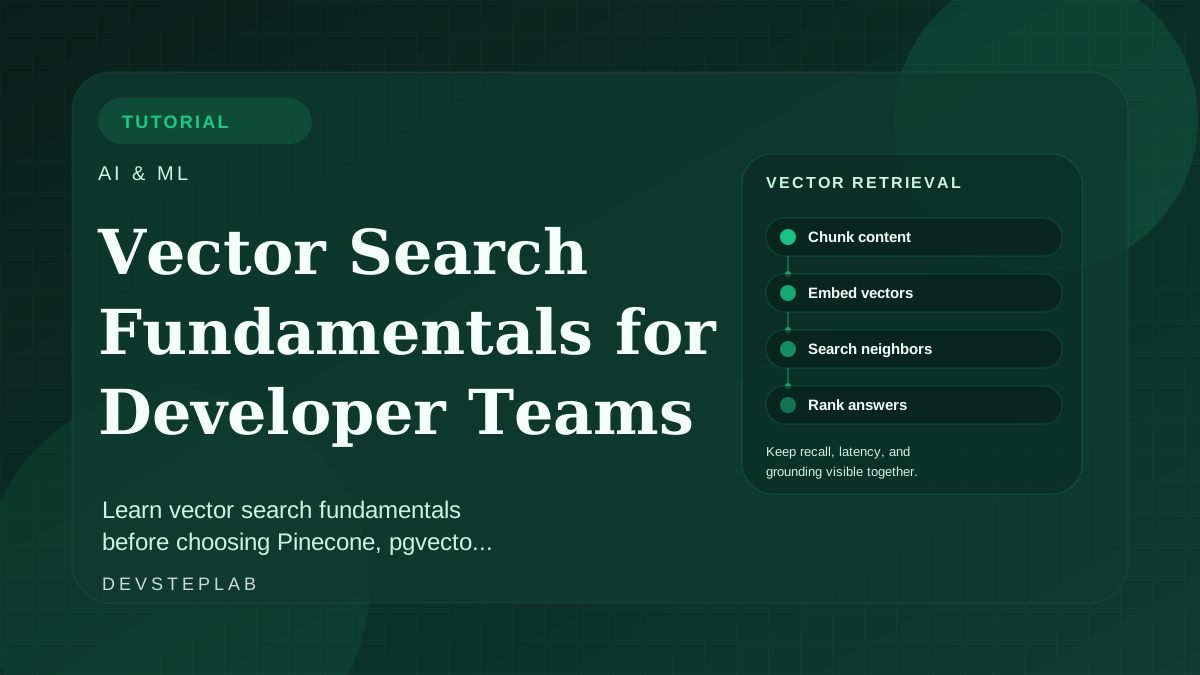
That is why Vector Search Fundamentals for Developer Teams belongs in the early design phase, not as a later optimization.
Keep the first pipeline explicit
A simple first pipeline is usually enough:
const matches = await retrieveContext(userQuery);
const prompt = buildPrompt({ userQuery, matches });
const response = await generateAnswer(prompt);
return validateAndFormat(response, matches);
This explicit flow is valuable because you can inspect and evaluate each stage before you hide it behind more tooling.
Evaluation is part of the feature, not post-processing
Create a small set of known tasks and expected outcomes:
- answer quality
- citation usefulness
- hallucination rate
- refusal behavior on unsupported questions
- latency and cost per request
Without this, teams ship demos that feel impressive for a week and unreliable for the next six months.
Product guardrails matter as much as model choice
Your first useful LLM application needs:
- scoped permissions
- clear fallback behavior
- user-visible uncertainty when evidence is weak
- logging for prompt, retrieval, and output failures
The model call is only one part of the system. The durable value comes from the workflow you build around it.
Related next reads
Frequently Asked Questions
Do I need an orchestration framework before I can build an LLM feature?
No. A useful first implementation can be built with explicit request flow, retrieval, and evaluation logic before a framework adds abstraction.
What causes most first-generation LLM products to fail?
They usually fail because retrieval quality, evaluation, and user-task framing are weak, not because the model API itself was hard to call.