The Data Science Roadmap for Software Engineers
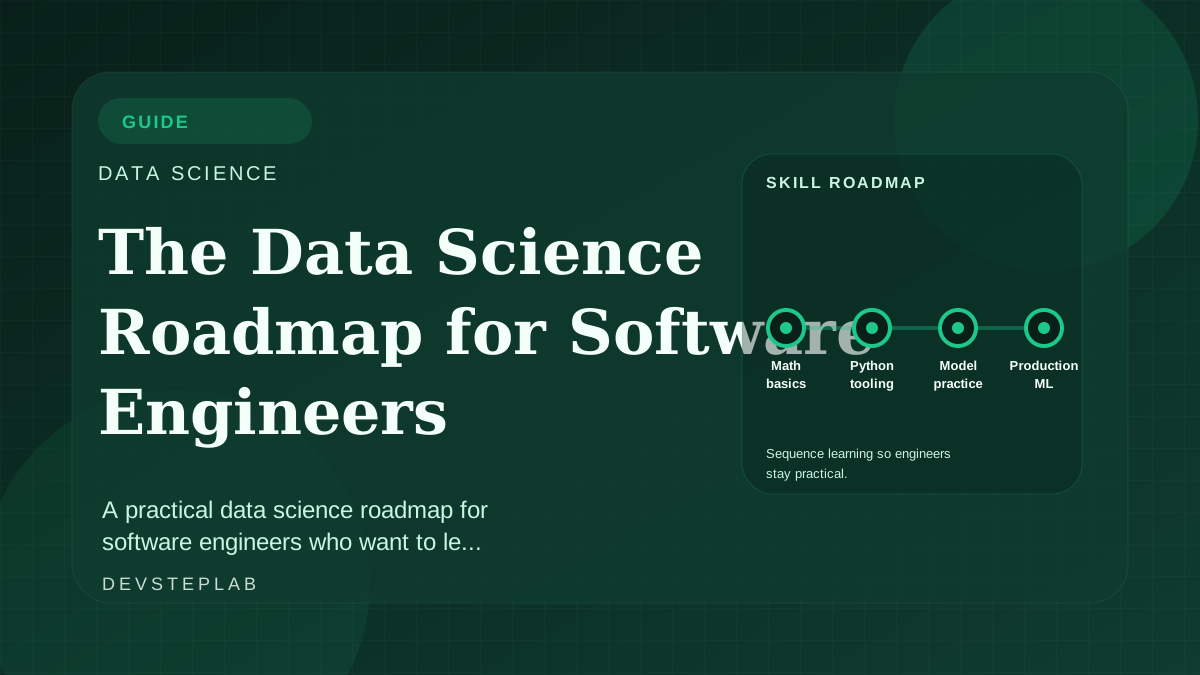
A practical data science roadmap for software engineers who want to learn statistics, experimentation, modeling, and production ML in the right order.
Software engineers moving into data science often study the field in the wrong order. They jump into model APIs or tutorials before they understand the workflow that turns raw data into something trustworthy enough to support product decisions.
This guide lays out a sequence that keeps the learning grounded in practical engineering.
The fastest data science roadmap for software engineers starts with data literacy, experimentation, and evaluation before model obsession.
Start with data literacy
Before model training, learn how data is shaped, cleaned, and validated:
- tabular manipulation
- basic statistics
- missing-value handling
- dataset documentation
- reproducible notebooks and scripts
This work looks less glamorous than model demos, but it is what makes later results believable.
Learn evaluation early
Developers often underestimate how much of data science is measurement:
- what metric matches the product goal?
- what baseline are you comparing against?
- how will you detect drift or regression later?
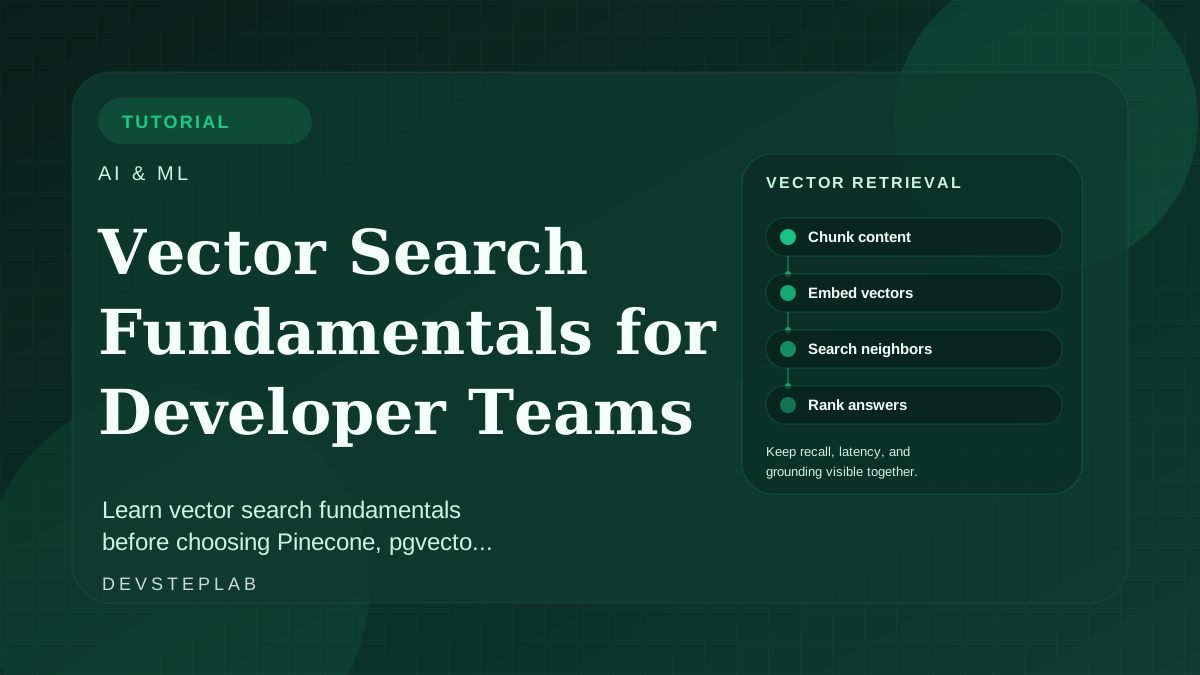
The evaluation habit matters just as much in retrieval systems, which is why Vector Search Fundamentals for Developer Teams is a useful companion here.
Understand the model classes that matter in practice
You do not need every algorithm first. You do need a working understanding of:
- regression and classification
- tree-based models
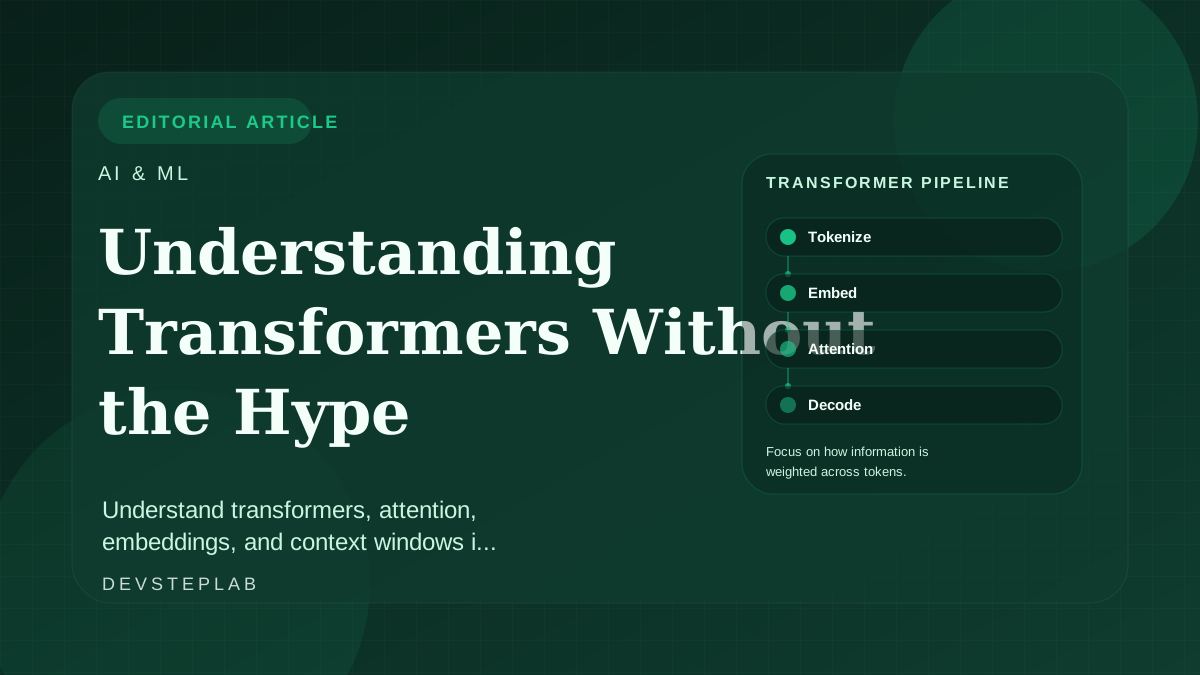
- embeddings and retrieval for language systems
- basic neural network concepts
That gives you enough context to judge when a problem is likely to benefit from a heavier model pipeline.
Add production concerns before specialization
Data science becomes engineering when you consider:
- data freshness
- feature consistency
- training and inference boundaries
- monitoring
- rollback and human review
This is the difference between a notebook result and a product capability.
Choose the next specialization after the foundation
Once the workflow is clear, pick the area that matches your goals:
- analytics engineering
- machine learning engineering
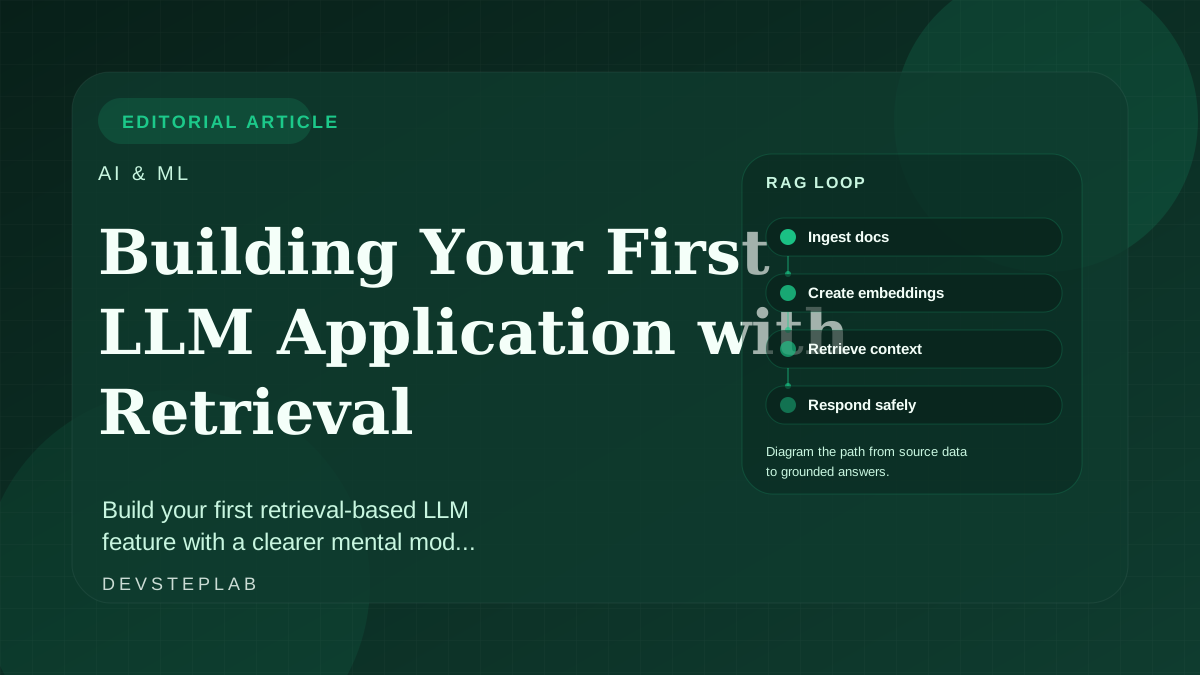
- retrieval and LLM application development
- experimentation and decision systems
The roadmap works best when it is staged. Learn the shared workflow first, then go deep where the product problems actually live.
Related next reads
Frequently Asked Questions
Do software engineers need advanced mathematics before learning data science?
No. You need enough statistics and linear algebra to understand modeling tradeoffs, but you can build practical workflow competence before going deep into theory.
Should developers start with model training or with data work?
Start with data work. Most useful data science systems depend more on clean data, evaluation, and deployment discipline than on training sophisticated models immediately.