Building a Full-Stack App with the Next.js App Router

Build a full-stack Next.js App Router application with forms, mutations, caching, route handlers, and production-safe data boundaries.
The Next.js App Router becomes productive when you stop thinking in terms of separate frontend and backend projects and start thinking in terms of rendering boundaries, mutation boundaries, and cache boundaries.
This tutorial shows how to connect those three pieces into one coherent application flow.
A successful Next.js App Router app depends on clear boundaries between server rendering, mutations, and cache invalidation.
Model the page around data ownership
Start by asking where each piece of data should be fetched and who owns the mutation path.
- Server components should own initial page data.
- Client components should own local interaction state.
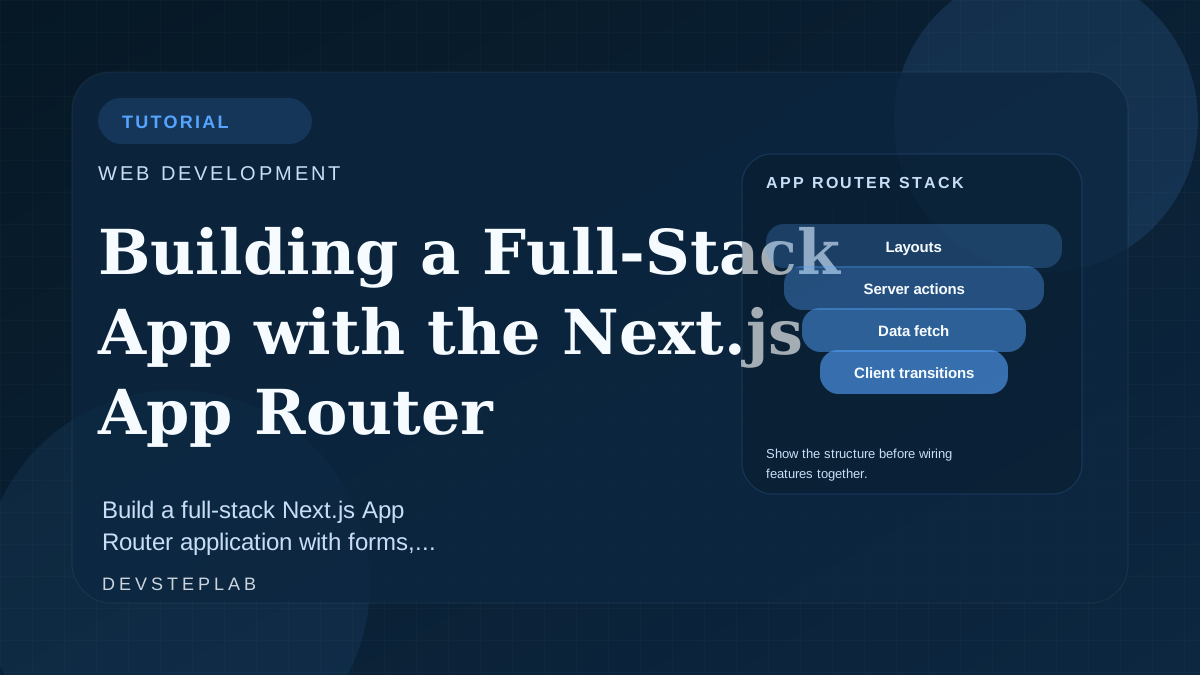
- Server actions or route handlers should own writes.
This prevents a common anti-pattern where the page fetches everything client-side just because one widget is interactive.
Use server actions deliberately
Server actions are best when the form and the write path belong to the same product surface.
'use server';

import { revalidatePath } from 'next/cache';

export async function createProject(formData: FormData) {
  const name = String(formData.get('name') ?? '');
  await db.project.create({ data: { name } });
  revalidatePath('/dashboard');
}
The key is keeping validation and authorization in the action itself. Client-side checks improve UX. They do not protect the mutation.
Treat caching as part of the architecture
The App Router gives you more caching control, but that also means more ways to create stale or inconsistent pages.
Decide which routes are:
- fully static
- cached with revalidation
- dynamic per request
If you are also handling sign-in and role-aware pages, keep this aligned with Next.js Authentication with Auth.js so personalized content does not accidentally leak into shared caches.
Keep the client bundle honest
Only move components to the client when they need browser APIs, local interactivity, or optimistic UI. Everything else can stay server-rendered and cheaper to hydrate.
That discipline matters on content-heavy sites because the same pattern that improves app performance also improves crawlability and rendering stability.
Build the system as one delivery surface
A good App Router application is not a pile of features. It is a delivery model:
- data fetched at the right boundary
- mutations validated on the server
- cache invalidation designed on purpose
- client code reserved for actual interactivity
When those rules stay consistent, the framework stops feeling magical and starts feeling predictable.
Related next reads
Frequently Asked Questions
Should every form use a server action?
No. Server actions are strong for tightly coupled mutations, but route handlers or separate APIs can be clearer when multiple clients or complex workflows need the same contract.
How do I avoid stale data after a mutation?
Revalidate the affected route segments or data tags explicitly, and design cache boundaries so you know which pages depend on which mutation paths.